Vinquenya
(neo-Quenya)
Tengwassë (alphabet)
Article
Pronoun
I Tengwassë
(Consonants)
In the Latin Alphabet, Quenya has __ tengwa*
In the Latin Alphabet, Quenya has __ letters
A, B, C, D, E, F, G, H, I, K, L, M, N, O, P, Q, R, S, T, V, X, Y, Z

The first letter of the alphabet. It’s name Tinco means “metal” in Quenya

The second letter of the alphabet. It’s name Parma means “book” in Quenya

The third letter of the alphabet. It’s name Calma means “lamp” in Quenya

The fourth of the alphabet. It’s name Quessë means “feather” in Quenya

The fifth letter of the alphabet. It’s name Ando means “gate” in Quenya

The sixth letter of the alphabet. It’s name Umbar means “fate” in Quenya

The seventh letter of the alphabet. It’s name Anga means “iron” in Quenya

The eighth letter of the alphabet. It’s name Ungwë means “web” in Quenya

The ninth letter of the alphabet. It’s name Súle means “spirit” in Quenya

The tenth letter of the alphabet. It’s name Formen means “North” in Quenya

The eleventh letter of the alphabet. It’s name Aha means “rage” in Quenya

The twelfth letter of the alphabet. It’s name Hwesta means “breeze” in Quenya

The thirteenth letter of the alphabet. It’s name Anto means “mouth” in Quenya

The fourteenth letter of the alphabet. It’s name Ampa means “hook” in Quenya

The fifteenth letter of the alphabet. It’s name Anca means “jaws” in Quenya

The sixteenth letter of the alphabet. It’s name Unquë means “a hollow” in Quenya

The seventeenth letter of the alphabet. It’s name Númen means “west” in Quenya

The eighteenth letter of the alphabet. It’s name Malta means “gold” in Quenya

The nineteenth letter of the alphabet. It’s name Ñoldo means “one of the noldor” in Quenya

The twentieth letter of the alphabet. It’s name Ñwalmë means “torment” in Quenya

The twenty-first letter of the alphabet. It’s name Órë means “heart” in Quenya

The twenty-second letter of the alphabet. It’s name Vala means “one of the valar” in Quenya

The twenty-third letter of the alphabet. It’s name Anna means “gift” in Quenya

The twenty-fourth letter of the alphabet. It’s name Vilya means “sky” in Quenya

The twenty-fifth letter of the alphabet. It’s name Rómen means “east” in Quenya

The twenty-sixth letter of the alphabet. It’s name Arda means “region” in Quenya

The twenty-seventh letter of the alphabet. It’s name Lambë means “tongue” in Quenya

The twenty-eight letter of the alphabet. It’s name Alda means “tree” in Quenya

The twenty-ninth letter of the alphabet. It’s name Silmë means “light” in Quenya
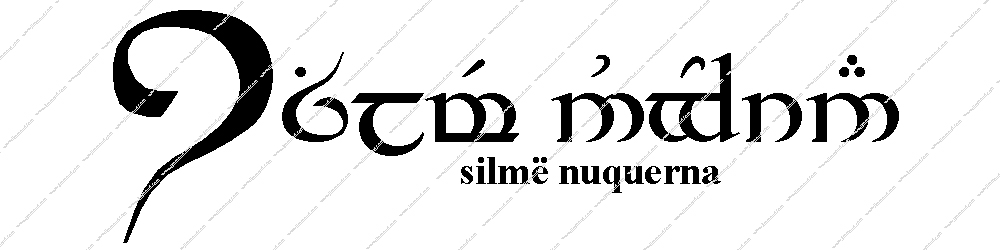
The thirtieth letter of the alphabet. It’s name Silmë Nuquerna means “reversed light” in Quenya
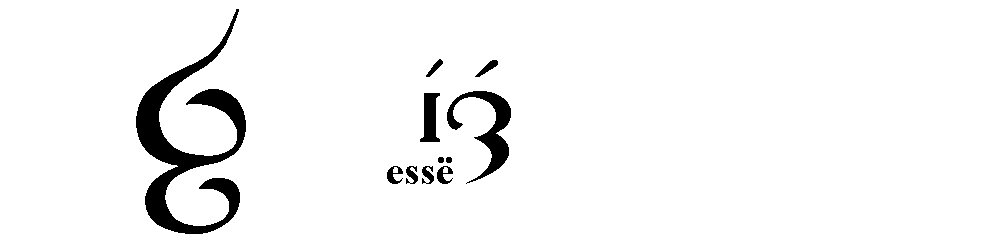
The thirty-first letter of the alphabet. It’s name Essë means “name” in Quenya
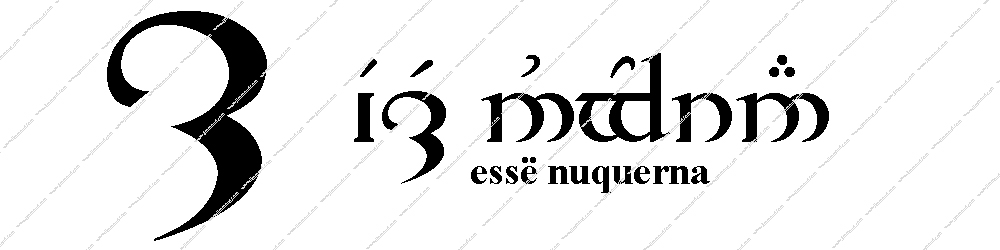
The thirty-second letter of the alphabet. It’s name Essë Nuquerna means “reversed name” in Quenya

The thirty-third letter of the alphabet. It’s name Hyarmen means “south” in Quenya
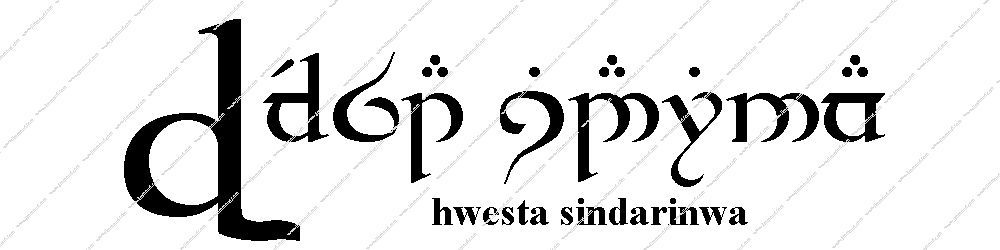
The thirty-fourth letter of the alphabet. It’s name Hwesta Sindarwina means “Sindarian Hwesta” in Quenya

The thirty-fifth letter of the alphabet. It’s name Yanta means “bridge” in Quenya

The thirty-sixth letter of the alphabet. It’s name Úrë means “heat” in Quenya

Halla, meaning “tall” in Quenya
(Vowels)
(there) (are) (five 5) ómar a, e, i, o, u. I ómar (can be short or long, long vowels are written with an acute accent in Latin script)
There) are five (5) vowels ⟨a, e, i, o, u⟩. The vowels can be short or long, long vowels are written with an acute accent in Latin script
| front | back | |
|---|---|---|
| close | ⟨i⟩ [i], ⟨í⟩ [iː] | ⟨u⟩ [u], ⟨ú⟩ [uː] |
| close-mid | ⟨e⟩ [éː] | ⟨ó⟩ [oː] |
| open-mid | ⟨e⟩ [ɛ] | ⟨o⟩ [ɔ] |
| open | ⟨a⟩ [a], ⟨á⟩ [aː] | ⟨⟩ [ː] |
I samnar* ….
The dipthongs are /iu, eu, ai, au, oi, ui/i
I Patacar
(העצורים)
I téma*
I calmatéma: calma (c), anga (ng), harma (), anca ()ñ
I parmatéma: parma (p), umbar (mb), formen (f), ampa (mp)
I quessetéma: quesse (qu), ungwe (), hwesta, (), unque ()
I tincotéma
I tyelpetéma
Continuant (mussë* tengwë): vowels, semi-vowels (w, y) and continuants (l, m, n, r)
Consonants are divided into Mutes, Liquids, Nasals and Spirants
The Mutes are b, c, ch, g, d, k, p, ph, q, t, th, of these
are voiced b, d, h
are voiceless c, k, p, q, t
are aspirated ch, ph, th
They are classified as
Labials: b, p, ph
Dentals (or Linguals) d, t, th
Gutturals (or Palatals) g, c, k, q, ch
The nasals are m, n (also n advlterīnvm as in ‘sing’
The spirants are h, f, s
The liquids are l, r
The Semivowels i, v
The double vowels x (cs), z
| Labial | Alveolar | Palatal | Velar | Glottal | |
|---|---|---|---|---|---|
| nasal | [m] | [n] | ⟨ñ~n⟩ [ŋ] | ||
| plosive | p [p] : b | t [t] : d | ⟨ty⟩ [c] : ⟨nd⟩ [ⁿɟ] | c [k[ : g | |
| fricative | f : v | s | ⟨hy, ht⟩ [ç] | ⟨ht⟩ x | h |
| trill | ⟨hr⟩ [r̥] : ⟨r⟩ [r] | ||||
| lateral | l | ||||
| lateral fricative | ⟨hl⟩ [ɬ] | ||||
| semivowel | ⟨hw⟩ [ʍ] : [w] | [j] |
| temár> tjeller! | Tincotémar | Tyelpetémar | Parmatémar | Calmatéma | Quessetéma |
| t [t] | p [t] | c [k] | qu [] | ||
| (n)d | (m) b | (n)g | (n)gw | ||
| g | c, k, q | ch | guttural | ||
| l, r | |||||
| Nasals | m [n] | ||||
| Spirants | f | labial | |||
| s | dental | ||||
| h | guttural | ||||
| Semivowels | i, v |
Phonotactics
Words can only begin with the letters ⟨c, f h, hl, hr, hw, hy, l, m, n, ñ, p, r, s, t, v, w, y⟩
Only the letters ⟨c, l, m, n, p, s, t⟩ can be geminated
Summary
| שם האות | הואת | |
|---|---|---|
| רָֽגֶל אוֹ שָֽׁמֶשׁ | ⟨telco⟩ ~ ⟨Anar⟩ // ~ // | |
| שָֽׁחַר | ⟨ára⟩ // | |
| מַתֶּכֶת | t | ⟨tinco⟩ // |
| סֵפֶר | p | ⟨parma⟩ // |
| נֵר | k | ⟨calma⟩ // |
| נוֹצָה | qu | ⟨quesse⟩ // |
| שָֽׁעַר | nd | ⟨ando⟩ // |
| גּוֹרָל | mb | ⟨umbar⟩ // |
| ng | ⟨anga⟩ // | |
| ngw | ⟨ungwe⟩ // | |
| רוח | s | ⟨súle<thúle⟩ // |
| צפון | f | ⟨formen⟩ // |
| h | ⟨aha⟩ // | |
| hw | ⟨hwesta⟩ // | |
| פה | nt | ⟨anto⟩ // |
| mp | ⟨ampa⟩ // | |
| nc | ⟨anca⟩ // | |
| nqu | ⟨unque⟩ // | |
| מערב | n | ⟨númen⟩ // |
| זהב | m | ⟨malta⟩ // |
| ñ>n | ⟨ñoldo⟩ // | |
| ñw>nw | ⟨ñwalme⟩ // | |
| לב | r | ⟨óre⟩ // |
| מלאך | v | ⟨vala⟩ // |
| מתנה | ⟨anna⟩ // | |
| שמים | w>v | ⟨wilya⟩ // |
| מזרח | r | ⟨rómen⟩ // |
| rd | ⟨arda⟩ // | |
| לשון | l | ⟨lambe⟩ // |
| עץ | ld | ⟨alda⟩ // |
| s | ⟨silme⟩ // | |
| s | ⟨silme nuquerna⟩ // | |
| שם | ss | ⟨esse⟩ // |
| ss | ⟨esse nuquerna⟩ // | |
| דרום | hy | ⟨hyarmen⟩ // |
| hw | ⟨hwesta sindarinwa⟩ // | |
| גשר | ⟨yanta⟩ // | |
| ⟨úre⟩ // | ||
| ⟨___⟩ // | ||
| ⟨___⟩ // | ||
| ⟨___⟩ // | ||
| ⟨___⟩ // |
____
(The Definite Article)
The definite article in Quenya is ⟨i⟩, and as in English it is invariable. Unlike English there is no indefinite article.
Thus ‘a book’ or ‘book’ is ⟨parma⟩ but ‘the book’ is ⟨i parma⟩
התיות היא ‘אִי’ ובאה לפני השם
⟨i parma⟩ ‘הַסֵּפֶר’
⟨i seldo*⟩ ‘הַיָּלֶד’
___
(nouns)
Nouns in Quenya decline for number and case. There are 3 classes or nouns
- Consonantal stems: nouns whose last letter is a consonant, eg.: ⟨nórë⟩ ‘land’
- Vocalic stems: nouns ending in a vowel, eg.: ⟨tyaro⟩ ‘agent’
- E-nouns: nouns ending in the vowel ⟨ë⟩, eg.: ⟨nórë⟩ ‘land’
Quenya nouns decline in the following number:
- Singular
- Dual:
- Partitive plural
- Plural
(dual)
The dual denotes two things which form a pair.
Natural pairs: two arms, two eyes, two ears
Closely connected: Two Towers
Formation of the dual. The dual form of the noun is marked in one of two ways. It is marked either with the consonantal suffix ⟨-t⟩ or the vocalic suffix ⟨-u⟩. The vocalic suffix is used with natural parts of the body
⟨tië⟩ ‘path’, dual is ⟨tiet⟩
⟨aran⟩ ‘king’, dual is ⟨aranet⟩
⟨hen⟩ ‘eye’, dual is ⟨hendu⟩
⟨ranco⟩ ‘arm’, dual is ⟨rancu⟩
⟨pé⟩ ‘lip’, dual is ⟨peu⟩
⟨pé⟩ ‘lip’, dual is ⟨peu⟩
⟨tál⟩ ‘foot’, dual is ⟨talu⟩
If one is talking about two things, then use ⟨atta⟩** ‘two
(partitive plural)
The partitive can denotes ‘some of’ or ‘part of’.
⟨nateli⟩ ‘some things’, from ⟨nat⟩ ‘thing’
It denotes ‘many of’.
⟨aldali⟩ ‘many trees’, from ⟨alda⟩ ‘tree’
Quenya nouns decline in the following cases
- Nominative
- Accusative
- Genitive
- Instrumental
- Allative
- Dative
- Locative
- Short locative*
- Ablative
- Adjectival or Possessive
(Nominative)
The nominative indicates the subject of the sentence.
| singular | -a | -ë | -o | -C |
| dual | ||||
| partitive | ||||
| plural | -ar |
(Accusative)
The accusative case indicates the direct object of the verb. In Tarquesta it has the same form as the nominative but in Ancient Quenya and Parmaquesta its dorms are:
| -a | -ë | -o | -C | |
| singular | -á | -é | -ó | -Ca |
| dual | ||||
| partitive | ||||
| plural |
(Genitive)
The genitive case indicates
- Origin: the best X of X
- Part
- Topic
- Family relations
| -a | -ë | -o | -C | |
| singular | -o | -ëo | -o | -Co |
| dual | ||||
| partitive | ||||
| plural |
(instrumental)
The instrumental indicates means or instrument.
In passive sentences, the insturmental case indicates the the actor.
example: the book was read to the children by their grandmother.
| -a | -ë | -o | -C | |
| singular | -anen | -enen | -oinen | -inen |
| dual | ||||
| partitive | ||||
| plural |
(allative)
The allative case indicates motion towards a place
| -a | -ë | -o | -C | |
| singular | -anna | -enna | -onta | -ta |
| dual | ||||
| partitive | ||||
| plural |
(dative)
The dative case indicates the indirect object of a verb.
- I give the book to X
- I fight for X
| -a | -ë | -o | -C | |
| singular | -an | – en | -or | -en |
| dual | ||||
| partitive | ||||
| plural |
(locative)
The locative case indicates location or position
| -a | -ë | -o | -C | |
| singular | -assë | -essë | -ossë | -issë |
| dual | ||||
| partitive | ||||
| plural |
(short locative)
The short locative case
| -a | -ë | -o | -C | |
| singular | -as | -es | -os | -is |
| dual | ||||
| partitive | ||||
| plural |
(ablative)
The ablative case indicates motion away from a place.
I went from X to you
| -a | -ë | -o | -C | |
| singular | -allo | -ello | -ollo | -ullo |
| dual | ||||
| partitive | ||||
| plural |
(adjectival or possessive)
The adjectival or possessive case indicates material possession / ownership, quality, topic. Forms adjectives from nouns
| -a | -ë | -o | -C | |
| singular | -ava | -eva | -ova | -wa |
| dual | ||||
| partitive | ||||
| plural |
____essë
(pronouns)
| קִנְיָן | משא | ארך | קצר | |
|---|---|---|---|---|
| 1st (sg.) | -nya | -n | -nyë | -n |
| 2nd. (sg,) | -tyë | -t | ||
| 2nd (sg., polite) | -lya | -lyë | -l | |
| 3rd (sg.) | -s | -ryë | -s | |
| 3rd (sg.m) | -rya (שלו?) | -ro | -s | |
| 3rd (sg.f.) | -rya (שלה?) | -rë | -s | |
| 1st (dual) | -lva | -lvë -lwë | -m | |
| 1st (pl., exclussive) | -mma | -mmë | -m | |
| 1st (pl. inclussive) | -lma | -lmë | -m | |
| 2nd (pl.) | -ccë | -l | ||
| 2nd (pl. polite) | -llë | -l | ||
| 3rd (pl.) | -nta | -t | -ntë | -t |
| 4th. (pl.) | – | -r | ||
| one, you | quen |
lanteanyë = אני נופל
méranyes = אני רוצה אותו
| קִנְיָן | משא | ארך | הֹוֶה | |
|---|---|---|---|---|
| 1st (sg.) | -nya | -n | -nyë | nan |
| 2nd. (sg,) | -tyë | nat | ||
| 2nd (sg., polite) | -lya | -lyë | nat | |
| 3rd (sg.) | -s | -ryë | na | |
| 3rd (sg.m) | -rya (שלו?) | -ro | nas | |
| 3rd (sg.f.) | -rya (שלה?) | -rë | nas | |
| 1st (dual) | -lva | -lvë -lwë | namnë | |
| 1st (pl., exclussive) | -mma | -mmë | namnë | |
| 1st (pl. inclussive) | -lma | -lmë | namnë | |
| 2nd (pl.) | -ccë | nal | ||
| 2nd (pl. polite) | -llë | nal | ||
| 3rd (pl.) | -nta | -t | -ntë | nat |
| 4th. (pl.) | – | nar | ||
| one, you | quen |
(emphatic pronouns)
Example: even I. I, too. but I
first person singular ⟨inyë⟩, plural ⟨emmë, elmë, elvë⟩
second person formal singular ⟨elyë⟩, plural ⟨ellë⟩
second person familiar singular ⟨etyë⟩, plural ⟨eccë⟩
third person singular ⟨ero, erë, eryë⟩, plural ⟨entë⟩ ‘them’
(object Pronouns)
first person singular ⟨nyë⟩ ‘me’, plural ⟨me, met⟩ ‘us’
second person formal singular ⟨lyë⟩ ‘you’, plural ⟨lyë⟩ ‘you’
second person familiar singular ⟨tyë⟩ ‘you’, plural ⟨lyë⟩ ‘you’
third person singular ⟨son, sen, san⟩ ‘him/her/it’, plural ⟨te⟩ ‘them’
(indirect object Pronouns)
first person singular ⟨nin⟩ ‘(to) me’, plural ⟨men, ment⟩ ‘(to) us’
second person formal singular ⟨len⟩ ‘(to) you’, plural ⟨len⟩ ‘(to) you’
second person familiar singular ⟨cen⟩ ‘(to) you’, plural ⟨len⟩ ‘(to) you’
third person singular ⟨ta⟩ ‘him/her/it’, plural ⟨tien⟩ ‘(to) them’
(Possessive Pronouns)
first person singular ⟨-nya⟩ ‘my’, plural ⟨-lma, -mma, -lva⟩ ‘our’
second person formal singular ⟨-lya⟩ ‘your’, plural ⟨-lla⟩ ‘your’
second person familiar singular ⟨-tya⟩ ‘your’, plural ⟨-cca⟩ ‘your’
third person singular ⟨-rya⟩ ‘his/her/its’, plural ⟨-nta⟩ ‘their’
(relative)
⟨i⟩ who, whom
⟨ya⟩ that, which, who, whom
Genitive ⟨yo⟩ ‘whose’
⟨yassë⟩ in which
⟨yanna⟩ into which
(indefinite)
⟨quen⟩ someone
I____
(שאלות)
(Interrogative)
⟨ma⟩ מלית שאלה
⟨ma Celebrimbor i coanen ?⟩ Is Celebrimbor at home?
⟨man?⟩ who?, what?
⟨man?⟩ who?, what?
I Epepaninci*
(תחליות)
⟨an-⟩ the intensive prefix. This used to form the superlative.
- ⟨airë⟩ ‘holy’ > ⟨anairë⟩ ‘holiest’
- ⟨calima⟩ ‘bright’ > ⟨ancalima⟩ ‘brightest, exceedingly bright’
⟨en-⟩ re-, again
לפעלים
⟨ana-⟩ ‘to, towards’
⟨ap-⟩ ‘after’
⟨apa-⟩ ‘after’
⟨at-⟩ ‘again, back, re-‘
⟨ata-⟩ ‘again, back, re-‘
⟨au-⟩ ‘away, without’
⟨en-⟩ ‘again’
⟨et-⟩ ‘forth, out’
⟨ete-⟩ ‘forth, out’
⟨hó-⟩ ‘away’
⟨nan-⟩ ‘back’
⟨ó-⟩ ‘together’
⟨ter-⟩ ‘through’
⟨undu-⟩ ‘down’
Adjectives & nouns
⟨al-⟩ ‘un-‘
⟨ala-⟩ ‘un-‘
⟨ar-⟩ 1. ‘beside, outside’, 2. ‘noble, royal’
⟨ara-⟩ ‘noble, royal’
⟨ava-⟩ ‘un-‘
⟨can-⟩ ‘four, quad-‘
⟨il-⟩ ‘un-‘
⟨li-⟩ ‘many’
⟨lin-⟩ ‘many’
⟨nel-⟩ ‘three, tri-‘
⟨ú-⟩ ‘un-, not’
⟨vin-⟩ ‘neo-, new’, ⟨Vinquenya⟩ ‘Neo-quenya’
I Appaninci*
(סופיות)
⟨-arwa⟩ ”’
⟨-da⟩ ”. ⟨yulda⟩ ‘draught’ from the verb ⟨yul-⟩ ‘to drink’. ⟨carda⟩ ‘deed’ from the verb ⟨car-⟩ ‘do, make’
⟨-(n)duinë⟩, large river suffix ‘river’. ⟨Anduinë⟩ ‘Long river’, ⟨Nanduinë⟩ ‘West river”duinë’, ⟨Tamenduinë⟩ ‘the river Thames’
⟨-ë⟩ ”. with lengthening of the stem vowel. ⟨nútë⟩ ‘knot’ from ⟨nut-⟩ ‘to tie’, ⟨lírë⟩ ‘song’ from ⟨lir-⟩ ‘to sing’, ⟨sírë⟩ ‘river’ from ⟨sir-⟩ ‘to flow’, ⟨airë⟩ ‘sanctity’ from ⟨aira⟩ ‘holy’
⟨-ië⟩ forms abstract nouns, ‘-ness’. ⟨tengwestië⟩ ‘language’ from ⟨tengwesta⟩ ‘code, system of signs’, ⟨verië⟩ ‘boldness’ from ⟨verya, verya-⟩ ‘bold, to dare’
⟨-iël⟩ ”
⟨-il⟩ ”
⟨-ima⟩ ‘-able, -ible, able to be done, possible’. ⟨mátima⟩ ‘edible’ from the verb ⟨mat-⟩ ‘to eat’
⟨-incë⟩ ”
⟨-indë⟩ ”
⟨-indo⟩ ”
⟨-inqua⟩ ”
⟨-ion⟩ ”
⟨-lë⟩ ”
⟨-llë⟩ ”
⟨-më⟩ ”
⟨-mo⟩ ”
⟨-(n)dacil⟩ ‘victor’
⟨-në⟩ ”
⟨-on⟩ ”
⟨-r⟩ ”
⟨-rë⟩ ”
⟨-rin⟩ ”
⟨-ro⟩ ”
⟨-sta⟩ ”
⟨-ssë⟩ forms abstract nouns: ‘-ship, -tion’
⟨-vëa⟩ ”
⟨-wë⟩ ”
⟨-Vt⟩ ” ⟨hyapat, lanat, sarat⟩
I Epepanyessi*
(מלות יחס)
⟨ama⟩ ‘onto, up, upward’
⟨amba⟩ ‘onto, up, upward’
⟨an⟩ ‘because of, for, until’
⟨ana⟩ ‘to towards’
⟨apa⟩ ‘behind, in the rear’
⟨ara⟩ ‘beside, outside’
⟨arwa⟩ + genitive, ‘having, with’
⟨enga⟩ ‘except, save’
⟨epë⟩ ‘before’
⟨et⟩ + ablative, ‘out of’
⟨harë⟩ ‘near’
⟨hequa⟩ ‘except, save’
⟨ho⟩ ‘from’
⟨imbë’⟩ ‘between’
⟨mi⟩ ‘in, on’, ⟨mí⟩ ‘in the
⟨minna⟩ ‘into’
⟨mír⟩ ‘into’
⟨na⟩ ‘to, towards’
⟨no⟩ ‘beneath, under’
⟨nu⟩ ‘beneath, under’
⟨or⟩ ‘above’
⟨tenna⟩ ‘until’
⟨terë⟩ ‘through’
⟨ú⟩ + genitive, ‘without’
⟨undo⟩ ‘beneath, under’
⟨vë⟩ ‘as, like’, used to form adverbs
⟨yo⟩ ‘together with’
תארי פעל
The suffix ⟨-vë⟩ is used to convert an adjective into an adverb. Adverbs follow the verb.
calima ‘bright’ > calimavë ‘brightly’, rimba ‘much’ > rimbavë ‘frequently’, linta ‘swift’ > lintavë ‘swiftly’, tára ‘high’ > táravë ‘highly’
morë ‘dark’ > morivë ‘darkly’
melin ‘dear’ > melinvë ‘dearly’
I nótessi
(numerals)
| Cardinal | Ordinal | adverbial | Fractions | |
|---|---|---|---|---|
| 1 | minë | minya | ellumë | __ |
| 2 | atta | attea | yullumë | peresta / perta |
| 3 | neldë | neldea | nellumë | nelesta, neldesta, nelta, nelsat |
| 4 | canta | cantea | kantallumë** | canasta, casta, cansat |
| 5 | lempe | lempea | lemillumë* | lepesta, lepsat |
| 6 | enque | enquea | enqellumë* | enquesta |
| 7 | otso | otsea | otsollumë | otosta, osta, otsat |
| 8 | tolto | toldea | tolosta, tosta, tolsat | |
| 9 | nertë | nertea | neresta, nesta, nersat | |
| 10 | cainen | quainea | caista | |
| 11 | minquë | minquesta | ||
| 12 | yunquë | yunquesta |
haran / tuxa = 100
húmë = 1,000
mindóra = 1,000,000
Cariquetta
(verb)
(the Infinitive)
of Basisc Verbs
| vowel | |||
|---|---|---|---|
| a | mat- | mátë | |
| e | quet- | quetë | |
| i | tir- | tírë | to see |
| o | o | ë | |
| u | ë |
of A-Verbs
| lanta- | lanta | to fall |
Méran* matë : אני רוצה לאכל
pólan tecë : אני יוכל לכתב
(the Long Infinitive)
To attach object pronouns to infinitives, a special form of the infinitive is used.
| Long fininitive | ||
|---|---|---|
| car- | carita- | to do X |
| cen- | cenita- | to see X |
⟨méran cennitas⟩ ‘I want to see it’together with’
(gerund)
The gerund is a noun which describes the action of the verb. As a noun it is fully declinable
of Basic Verbs
| vowel | |||
|---|---|---|---|
| a | – | ë | |
| e | tec- | tecië | writing |
| i | – | ë | |
| o | o | ë | |
| u | ë |
of A-Verbs
The gerund for A-verbs is formed as with basic verbs, but for verbs which end in ⟨-ya⟩, this is dropped before the ending ⟨-ië⟩
| lanta- | lantië | falling |
| hilya | hilië | following |
(tenses)
Aorist tense – זְמן הֹוֶה תתת
- harya-: harya, haryir** (הָיֹה לְ־)
- mat-: matë, matir (אָכֹל)
⟨polin quete i lambe eldaiva⟩ ‘I can speak the Elven language’
Present tense – זְמן הֹוֶה תתת
The present tense is used for actions that are currently in action
- hlar-: hlára, hlárar (שָׁמֹעַ)
- mat-: máta, mátar (אָכֹל)
- tir-: tíra, tírar (___)
- tul-: túla, túlar (בּוֹא)
- quet-: quétëa**, quétëar* (דַּבֹּר)
- anta-: antëa, antëar* (נָתֹן)
- ora-: orëa, antëar* (___)
- lanta-: lantëa, lantear (נָפֹל)
- lelya-: lelyëa, lelyear (הָלֹךְ)
Future tense – זְמן עָתִיד
The future tense describes events or actions which have not yet happened. They are formed with the suffux ⟨-uva⟩. For A-verbs the final final vowel is dropped
- harya-: haryuva, haryuvar (הָיֹה לְ־)
- mat-: matuva, matuvar (אָכֹל)
Past tense – זְמן עָבָר
The past tense describes actions that have begun in the past but does not indicate if they have been completed.
- hlar-: hlárnë, hlárner (שָׁמֹעַ)
- mat-: mantë, manter (אָכֹל)
- cen-: cennë, cenner (רָאֹה)
- mel-: mellë, meller (אָהֹב)
- tul-: tullë, tuller (בּוֹא)
- wil-: willë, willer (בּוֹא)
- cap-: campë, camper (קָפֹץ)
- anta-: ???? (נָתֹן)
- quet-: quentë**, ???* (דַּבֹּר)
- tul-: túlë, túler* (?) (irregular)
- ista-: sintë, sinter* (?) (irregular)
- lelya-: lendë, lender* (הָלֹךְ) (irregular)
- lanta-: lantanë, lantear (נָפֹל)
Perfect tense – זְמן נִשְׁלָם****
The perfect tense is used to describe actions that have already been completed in the past.
- mel-: emelië, XXX (אָהֹב)
- tec-: etécië, XXX (כָּתֹב)
- mitta-: imittië, XXX (הכנס)
- virya-: avárië, XXX (irregular)
- verya-: evérië, XXX (irregular)
- quet-: equétië**, ???* (דַּבֹּר)
- ⟨anta-⟩: ⟨antië, antiër⟩ (נָתֹן)
- hir-: ⟨hírië, híriër⟩ (מֳצֹא)
- lanta-: alantië, lantear (נָפֹל)
- hauta-: ajautië, lantear (נָפֹל)
- ⟨verya-⟩: ⟨evérië, evérier⟩ (נָפֹל)
(imperative)
⟨á⟩
- mat-: á matë! : אכל/אכלי/אכלו/אכלנה
- lelya-: á lelya! : לך/לכי/לכו/לכנה
(negative imperative)
The negative particle ⟨áva⟩ is used before the infinitive of the verb to make a negative
- mat-: ⟨áva matë!⟩ :
- lelya-: ⟨áva lelya!⟩
() הַפּעַל הָיֹה
| זְמַן | |
|---|---|
| ná, nar | הֹוֶה |
| nauva | עָתִיד |
| ne (né), ner | הָֽעָבָר |
verb of negation umë (aorist), úma* (present tense), úme (past tense), úva (future tense), úmië? (perfect)
Adjectives
Attributive: describing nouns
The adjective generally comes before its noun ⟨tára alda⟩ but can also come after ⟨alda tára⟩ ‘a tall tree’ and can be made definite by placing the definite article before the phrase as in English: ⟨i tára alda⟩ ‘the tall tree’.
Unlike the noun, adjectives only decline for two numbers, singular and plural’
⟨i tárë aldar⟩ ‘the tall trees’
Predicative: the tree is tall
In the sentence ‘the tree is tall’, the noun ‘tree’ is the subject and adjective ‘tall’ is the predicative. The *copulative* verb ⟨na-⟩*** can be between the subject and predicate as in English, at the end like in Latin or ommitted* entirely. The sentence ‘the tree is tall’ can be rendered in Quenya:
- ⟨i alda ná tára⟩
- ⟨i alda tára ná⟩
- ⟨i alda tára⟩
⟨___⟩
The Last Declinable Word
⟨alda tára⟩
(relative sentences)
Quenya has two relative pronouns, the indeclinable ⟨i⟩ and the declinable ⟨ya⟩. The indeclinable pronoun ⟨i⟩, which is identical to the definite article, is restricted for use with persons referred to in the nominative and accusative case. The declinable pronoun ⟨ya⟩ is used in all nouns and cases.
ימי השבוע
Days of the Week
| בסנדרית | בקונית | |
|---|---|---|
| Orbelain | Valanya | יוֹם רִאשׁוֹן |
| Orgilion | Elenya | יוֹם שֵׁנִי |
| Oranor | Anarya | יוֹם שְׁלִישִׁי |
| Orithil | Isilya | יוֹם רְבִיעִי |
| Orgaladhad | Aldúya | יוֹם חֲמִישִׁי |
| Ormenel | Menelya | יוֹם שִׁשִּׁי |
| Oraearon | Eärenya | יוֹם שַׁבָּת |
Adjective:
anayantainë (ana + yanta- +ina + -ë) . yantaina ‘augmented’ is the passive participle of yanta- ‘augment’ with the suffix -ë used to turn adjectives to nouns. The prefix ana- ‘to, towards’.
orcaita—— or- () caita- (lay, place) -ina (passive participle)
caitaina (laid, place)
It is a calque of the Latin adiectīvus and Greek ἐπίθετος. (cf. ἐπίθετος, ἐπί- ‘on/upon/in addition to/intensive’+ θετός ‘placed’ perfect passive participle)
Adverb:
orcariquetta (or + cariquetta)
anacariquetta (ana + cariquetta), a calque of the Latin adverbium and Greek ἐπίρρημα
article (limë, limi-) ‘link’ (-incë = diminuitive limincë
gerund (verbal noun) : cariquettessë (cariquetta + essë)
prefix: epë- (before) + panya- (set) -incë epepanincë*
suffix : ap(a)-after + panya- (set): appanincë
preposition: epë- (before) + panya- (set): epepanyessë*
pronoun: opo + -essë
conjuction : yo (together) yanta- (join) yoyantassë*
Proper noun: véra + essë
Noun substantive: hróna + esse
Subject tyaro?
Governs tur-*
Stem vowel sumdóma
עוֹנוֹת הַשָּׁנָה:
| בסנדרית | בקונית | ||
|---|---|---|---|
| טלה | ethuil | tuilë | אָבִיב |
| לַיְרֶה | laer | lairë | קִָֽיִץ |
| יָֽוְיֶה | iavas | yávië | סְתָ֫ו |
| קלה | firith | quellë | |
| רִיוֶה | rhîw | hrívë | חֹ֫רֶף |
| קֻיְרֱה | echuir | coirë |
חדשי הַשָּׁנָה:
| בסנדרית | בקונית | ||
|---|---|---|---|
| נרוניה | Narwain // | Narvinyë // | 1 |
| ננימה | Nínui // | Nénimë // | 2 |
| סולימה | Gwaeron // | Súlìmë // | 3 |
| וירסה | Gwirith // | Víressë // | 4 |
| לוטסה | Lothron // | Lótessë // | 5 |
| נריה | Nórui // | Náríë // | 6 |
| קרמיה | Cerveth // | Cermië // | |
| אורמה | Urui // | Urimë // | |
| יוניה | Ivanneth // | Yavannië // | |
| נרקלה | Narbeleth // | Narquelië // | |
| היסימה | Hithui // | Hísimë // | |
| רנגרה | Girithron // | Ringarë // |
Glossary
| amatikse | dot or point placed above the line of writing |
| anayantainë / orcaitain-: | adjective: |
| anacariquetta – orcariquetta: | adverb: |
| andatehta | long mark |
| andatelko | long stem |
| andólama | long consonant |
| anwangolmë (anwa + ñolmë) | etymology |
| astaincë | particle |
| cariquetta | verb: |
| calmatéma | K-series |
| essë | noun |
| hlóngolmë* | phonology |
| napanna | additional letter |
| nómessë (nóm.): | toponym, placename: |
| notessë: | numeral |
| ólama | consonant |
| óma, pl. -ar | vowel: the vowels in Quenya are ⟨a, e, i, o, u⟩ |
| ómatailë | vowel lengthening |
| ómataima | vocalic extension |
| ovëantainë | calque: an imitation |
| parmatéma | P-series |
| punta | stopped consonant |
| putta | full stop (?) |
| qanta-tenkele (?) | full writing |
| quessetéma | Q-series |
| samna | diphthong |
| surya: | spirant consonant |
| tehta | mark, sign, diacritic |
| tengwa: | letter; writing, grammar |
| tengwanda | alphabet |
| tengwassë | alphabet: the letters of the alphabet are: |
| tiksë | dot, tiny mark, point |
| tincotéma | t-series |
| tyelpetéma | |
| unutiksë | dot or point placed below the line of writing |
| vinquetta: (vin- + quetta) | neologism: |
| anacariquetta | acq. | adv. | adverb |
| anayantainë | ayn. | adj | adjective |
| cariquetta | cq. | v. | verb |
| essë | es. | n. | noun |
| hanuvoitë essë | hes. | nm. | masculine noun |
| inimíte essë | ies. | nf. | feminine noun |
| nómessë | nóm. | placename |
 Home
Home 